Flex isn’t complicated
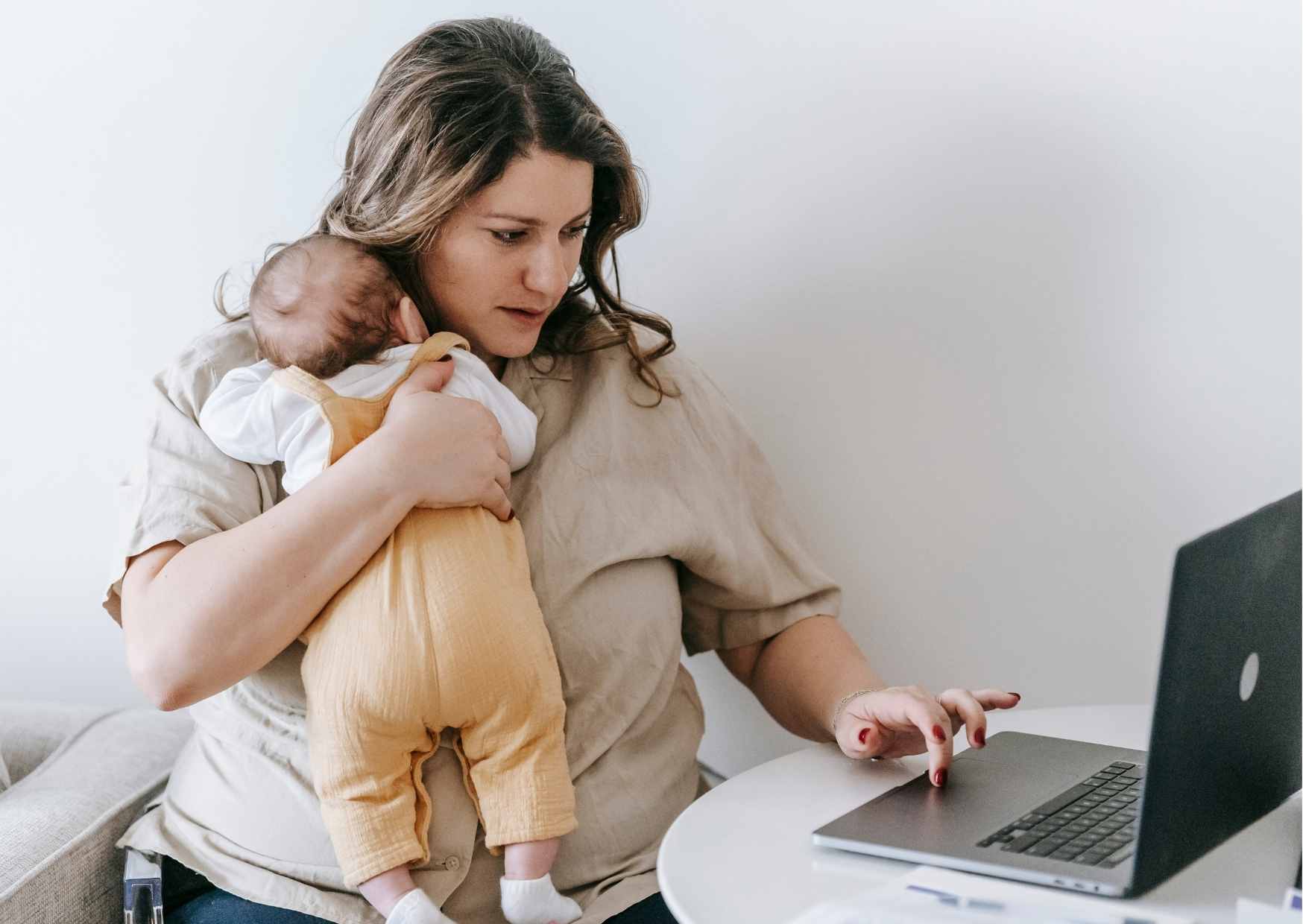
Two years ago I published a blog celebrating the 'lockdown babies' turning 3. Somehow, remarkably, our own lockdown baby turns 5 this week, leaving me wondering where that half-decade has gone.
It's hard to decide if it's my age, my circumstances, the impact of lockdown or the education sector more broadly that is to blame, but, for those of us still trying to navigate the messy unpredictability of family life with our careers, I find myself wondering whether I'm actually any closer to finding the 'balance' lauded as the holy grail for working mums.
Colleagues of mine know that I'm a fan of family visibility. I talk about my family frequently, openly and honestly at work, not because I'm under any illusion that people want to hear about them, but because I really believe that visibility is a key step to achieving equality and equity for parents at work. In the early 00s, as I rose through middle and senior leadership following my degree and PGCE at Cambridge, there was nobody visibly juggling motherhood and headship. The first generation of CEOs I can remember hearing speak were not mothers. To aspire to headteacher or CEO roles meant aspiring to a model based on presenteeism, exceptionally long working hours, work during evenings and weekends and a level of pressure 24/7 that was somehow meant to prove you were up to the job.
What's interesting now is to read about the reality of living for these colleagues, where they speak of burnout, poor mental health and absenteeism from their own homes and families.
When I became pregnant in 2014, this was the backdrop against which I had to decide my future – be present for my child(ren) in the early years or continue my career.It was a binary choice, and it didn't take much to decide to be present at home.As my peers, and those I'd mentored, became heads and policy makers, I juggled part-time and consultancy roles with nappies, feeding and preschool drop offs through two miscarriages and two further babies, all believing the sacrifices I'd made were worth it to be present at home. I'm also aware of what a privilege it was to be able to have that option available to us financially.
How different the last decade would have been if someone had offered me a genuine alternative.
I tweeted last month that, while flexibility is a very broad concept, for many, many women I know it would only have taken 3 things to have kept them in senior leadership and headship. Women who were exceptional teachers and leaders but who all found themselves in the same boat as me.
1.The chance to do the school drop off and pick up twice a week.
2. The knowledge that they will always be able to attend school events such as assemblies, nativities and parents' evenings for their own children.
3. A school culture where there is no requirement (explicitly or implicitly) to work in the evening or weekend, or when you're needed at home, except for where it allows you flexibility at other times.
By this I mean the removal of the expectation that you've read the email you've been sent on a Sunday before the SLT meeting on Monday morning. Or the subconscious guilt you feel if you know there's been a discussion between leaders by email in the evening that you haven't contributed to, or the underlying feeling this means you are judged differently to your colleagues. There is only one leader I've worked for who made all this possible and who genuinely empowered me to flourish as both a leader and parent. In every other role I've had to make sacrifices, becoming more confident in these with experience.
There is a lot of time and effort being afforded to the flex discussion in schools presently, and I absolutely think this is important.I do think we've lost sight of some of the simplicity in the debate though. Most women don't want or need complex flexible contracts (though I'm not saying these aren't important). They just need these three things, or a close variation of them.
Most of the women I know have taken senior roles in different organisations that have afforded them the flexibility they needed to make it work at home or taken sideways or 'backward' steps. Most of them would have loved to have been headteachers and CEOs. Imagine what the sector would look like now if we'd retained them all in schools. While there's loads of great work, case studies, guidance and toolkits, the reality is that flex in leadership remains a marginal, postcode lottery.
There are lots of green shoots: the organisations and leaders genuinely driving change such as MTPT, Flex Teacher Talent and WomenEd, of course, have been transformative at opening the door for the conversation to take place. There are a small number of MATs doing brilliant things. The DfE are saying all the right things. But I would argue that the lived reality for most parents who want to be genuinely present at home in the early years is still a binary choice, and that's hardly changed since I first took maternity leave in 2014. Where are the role models actually in headships and CEO roles? To find the flex they want, parents often must work harder or outside of the normal recruitment routes – it's a layer of bureaucracy that shouldn't exist. A quick search on the main job sites returns almost no roles at senior, head or director level which welcome flex.
All it really needs is a commitment by individuals, currently leaders in schools and MATs, to be proactive in advertising the culture they create for working parents and to enable all parents to have the three things outlined above. Oh, and then for the government to make this the norm for every teacher in every school in the country. Until then I'll continue to make my own situation visible and advocate others to do the same, while urging policy makers and campaigners not to overcomplicate the solution.
Salina is an NPQ facilitator and coach, AQA examiner and currently works as an Education Adviser.
- Hits: 4953