The Future is Feminist: Women's Contributions to STEM and the Path Ahead

by Kate Zogaj
The under-representation of women in STEM disciplines has received a lot of attention recently. Women have contributed significantly to science, technology, engineering, and mathematics despite historical obstacles. This article examines their accomplishments and provides suggestions for how our #WomenEd community might respond to and assist with an important call for action.

Contributions made by women in STEM

Women's accomplishments are sometimes disregarded or credited to men, yet women have long played a significant role in influencing STEM professions. The pioneering women of NASA's early space flights, as well as individuals like Ada Lovelace, Rosalind Franklin, and Marie Curie, have all made significant contributions. More recently, important honors for research in STEM subjects have been given to women like Jennifer Doudna and Emmanuelle Charpentier.

The next step

Although there has been improvement in women's STEM engagement, there is still much work to be done. Particularly in computer science and engineering, there are still too few women in these fields. Our community can take a number of actions to empower and support women in STEM to solve this disparity.

Promoting STEM careers

Young girls and women must be actively encouraged to choose STEM subjects, degrees and careers. Their curiosity and confidence can be sparked and increased by introducing them to influential women in STEM, developing mentorship programs, and giving them practical STEM experiences.

Addressing Bias and Discrimination:

We must address the prejudices and misconceptions that women in STEM areas experience. A more egalitarian atmosphere can be achieved by putting into place laws that prohibit gender-based discrimination in hiring and promotions, as well as diversity and inclusion training programs.

Creating Supportive Work Environments:

Women working in STEM fields can benefit from flexible work-life arrangements, including paid family leave and flexible hours. Promoting safe and inclusive work environments is critical to address the problem of sexual harassment, which frequently deters women from pursuing STEM jobs.

Recognizing Accomplishments:

Women working in STEM fields can benefit from flexible work-life arrangements, including paid family leave and flexible hours.

Intersectionality and Advancement:

To advance women from varied backgrounds in STEM professions, it is crucial to understand the significance of intersectionality. Barriers and challenges specific to women of color and people with disabilities must be removed. These barriers can be eliminated and equitable opportunities promoted through initiatives and mentorship programs that encourage women from various backgrounds.

Advantages of Gender Diversity:

In addition to being morally right, encouraging gender diversity in STEM professions is also advantageous for the industry. A wider range of ideas and methods for approaching problems are brought by gender diversity, resulting in more creative and efficient solutions. Additionally, it aids in closing the STEM skill gap, enabling access to a larger talent pool and boosting competition in the industry.

Conclusion
Women have significantly impacted STEM areas, and they are becoming more involved. Our community needs to aggressively address prejudices and hurdles in order to promote their success. We can create a future where women thrive and significantly contribute to STEM by supporting intersectionality, encouraging supportive settings, and embracing gender diversity. Together, let's empower women in STEM fields and create a more open, forward-thinking society.


Bio: Kate Zogaj is a feminist activist dedicated to promoting diversity and inclusivity in the tech industry. With a focus on women's contributions to technology, she actively encourages females to pursue careers in STEM, despite gender biases.

The Journey to becoming Flex Friendly

By Caroline Doherty @_C_J_B


Dear Headteacher,

If I were to offer you a simple way to get you a more diverse, skilled, happy and engaged workforce with greater levels of wellbeing, you’d say it sounds far too good to be true!

However, when I chaired a webinar on Flexible Working in partnership with the Department for Education and Teaching Vacancies this is exactly what we heard from our expert panellists happens when schools offer opportunities to work flexibly. You can watch the full recording here


Firstly, let's think about diversity and skills

Vivienne Porritt from WomenEd reminded us that women make up ¾ of the teaching workforce yet remain underrepresented and underpaid at leadership level. We are all aware of the high number of experienced female teachers aged 30-39 leaving a profession they love so they can spend time with their own children. But we should think more widely about people who for whatever reason might want to give less than 5 days a week to a role. Some might be semi-retired, have ill health, are caring for a parent, hold a very demanding volunteer role, are trying to start a business or complete a course of study: the list and the diverse range of ways such people could enrich your staff are limitless. If you think about the job that needs doing and who might be involved in getting it done, rather than always replacing like-for-like, it becomes easier to think creatively. Offering flexible or part-time working options when you recruit new positions will also open you up to talented people looking specifically for those opportunities and could be the difference between getting the absolute best person for the job 4 days a week rather than a less good fit for full time.

Schools can flag their willingness to consider flexible working when they post jobs on the Department for Education’s Teaching Vacancies service. Last year job listings on the site were viewed over 2.5 million times by potential job seekers. Teaching Vacancies is now the largest source of primary teaching jobs listed directly by schools in England. It’s also the second largest for secondary teaching jobs. I recommend all job seeking teachers sign up for job alerts so they are notified when a role that meets their flexible working criteria is listed.


Happy and engaged with increased wellbeing

Asma Maqsood Shah from United Learning told us more about how creating a culture of flexible working at her school had really improved morale and engagement. She explained that, by building in more flexible opportunities to participate, staff were more engaged and offered more discretionary effort when needed. Michael Scott from Newport Girls Grammar School also spoke clearly to the benefits of creating a flexible culture and thinking about how to offer flexibility around particular pinch points in the school year. Schools with a truly flexible culture think collaboratively about how the team can get things done and by providing different times and ways to be involved, people give more how and when they can. Muriel Tersago from Timewise reminded us of the importance of autonomy and choice to our wellbeing and whether it is something as simple as the opportunity to pick their own child up from school, make space for their own exercise and fitness or embark on a PhD. People are more than just their day job and those bits of freedom might be the difference between keeping someone in their job and losing them because they feel their workload is unmanageable.

The Department for Education published the Education Staff Wellbeing Charter in May, it sets out commitments from government, schools and colleges to promote and protect the wellbeing of staff. This includes commitments for organisations to create a supportive culture around flexible working. Working flexibly can be a key means of protecting and enhancing personal wellbeing. The charter has been launched for schools and colleges to sign up to from November.


The catch

You might have read all this and thought that sounds great but what about balancing the timetable, the impact on my budget and the fact I might not be able to say yes to everybody?

It might not all be plain sailing, but these are challenges schools have overcome and they are willing to share their expertise with you. The Department for Education has appointed eight Flexible Working Ambassador Schools with a track record of making it work in practice, to provide support at a local level. You can find out how to contact your local Flexible Working Ambassador School here.

As most businesses move to a more flexible working life, can school really afford to lag behind? In a recent Harvard Business Review survey 59% of knowledge workers wouldn’t work for a company that expected them in the office 5 days a week.

Thankfully there are lots of places you can go to learn about the benefits, practicalities and how to overcome the challenges of flexible working. The Department for Education have published a collection of resources, including non-statutory guidance and case studies.

DfE has also appointed Timewise Flexible Working Consultancy to provide training and practical support to headteacher/MAT leaders, HR professionals/school business professionals, and trustees/governors on a national scale.

Follow the links below to watch recordings of the training webinars.

WomenEd also have a range of great case studies of how to make flexible working work and members of The Key for School Leaders can access ideas here.

Finally, watch our conversation from last week here and don’t forget to list your flexible working roles on Teaching Vacancies

Best of luck with your journey towards becoming flex friendly!


The Juggle is Real

Leading with the Heart

Letting go, holding on, and holding the ladder for those who follow

There was a time when I weighed my progress against an ever-shifting scale of expectations, always looking for a sign that I was enough, chasing perfection in every meeting, every project, every moment as a professional and as a parent.

The Power of Purple - #WomenEd Unconference 2023

by Lisa Hannay@lhannay1

This past weekend I flew to London for the #WomenEd Unconference 2023.

My boss joked with me about being one of the rich elite jetting off to England for the weekend. I certainly feel rich after a weekend of empowerment and sisterhood. The overall theme for the weekend was DISRUPT and we certainly live in a world where there needs to be some good trouble and some good disruption.

I had a chance to speak briefly at the opening and it wasn't lost on me that in Canada it was National Day for Truth and Reconciliation and that I was standing on the land of the colonizer. I said as much to the group. You see the system (male, white, straight, Conservative and Christian) doesn't want anyone else having rights. Oh, they say they do, but then their ilk form protests and convoys because all of a sudden, they feel oppressed and persecuted. They figure they are getting less because others are getting even a small taste of the pie.

As women we are in the margins. Black and brown women further out of the margins. Muslim women further still. Add other protected characteristics – differently abled, lesbian, bi, trans – the system doesn't want to see us, never mind hear us. 

So, we gather on a Saturday and cheer and bolster each other on. 

The system is stacked against us by the nature of our biology. Periods, pregnancy, menopause, parenthood. 

These are things not discussed at other conferences. These are things that get women talking and the things that need talking about. Even though admittedly, it took some adjustment on my part to see this.

We disrupt the system by waking up in the morning. 

Seriously. 

The system doesn't pay us what we are worth, doesn't want to give us the healthcare we require, in fact wants to determine laws over our bodies. 

We make things difficult by getting up, getting dressed and getting going.

Disruption doesn't have to be loud, although it can be. Certainly the convoys and marches against women's rights, 2SLGBTQIA+ are loud, sadly misinformed, but loud. Challenging language in the workplace, talking about articles you have read on Twitter, talking about what you heard at the unconference are all ways to disrupt.

Women of privilege – we have a duty. 

Even though our voices might shake and our tummies twist at the thought, we have to speak up. I try to use my privilege because I have so much to learn. I engage because I still struggle with old ideas. Racism comes from hate or ignorance. I still grapple with ignorance.

I spoke to three lovely women in my session about my own journey and how I try to silence the voices in the cheap seats. I work on chipping away my armour and shame daily. I suggest the following:

  1. Live with integrity by claiming your identity
  2. Accept you who are – strengths and blind spots
  3. Build a network, flock, gaggle, cohort, crowd that support you and keep you honest (I don't use tribe as this is a word most affiliated with Indigenous people in Canada)
  4. Take inventory and find the ammunition others are dying to use against you: use it first. Tell your story, each time you do the shame that comes with it diminishes.
  5. Be Who You Are – shamelessly, authentically – whoever you are in this moment is who you are supposed to be. Live visibly.

If you are reading this, connect. 

I am on Twitter and LinkedIn.

Follow #WomenEd on Twitter and LinkedIn.

If you are reading this and were at the 2023 #WomenEd Unconference, what was your pledge? What do you need to make the pledge a reality? If you haven't yet made a pledge. what will your pledge be?

What will you disrupt today?

Thanks for reading!

Lisa H


The Seasonal Leader: The Danger of the phrase ‘Having it All’

Throughout my twenties and the early years of my career I have witnessed my generation of women and educational colleagues being chased by a persistent, glittering ghost: the myth of ‘having it all’. We see it in the polished profiles of social media: professionals who supposedly run marathons before dawn, revolutionise pedagogy by lunchtime and serve organic three-course dinners by dusk.

What is Equal Pay Day, 2023?

bVivienne Porritt   @ViviennePorritt

This is my 5th annual blog on Equal Pay Day for the UK which this year, is on 22nd November.

Equal Pay Day in the UK denotes the day when women, on average, effectively stop earning relative to men because of the gender pay gap. This means that women are working for nothing for the rest of the year compared to men.

I get more and more angry every year because the pernicious inequality of the #GenderPayGap is not improving fast enough and this year, it has increased in schools.

Have a look at my previous blogs! In 2019 it was on November 14th, in 2020 it was November 20thand in 2021 Equal Pay Day was November 28th, with 2022 being 20th November. 

After such improvement, we have gone backwards again meaning women have another 2 days where they are not earning compared to men.

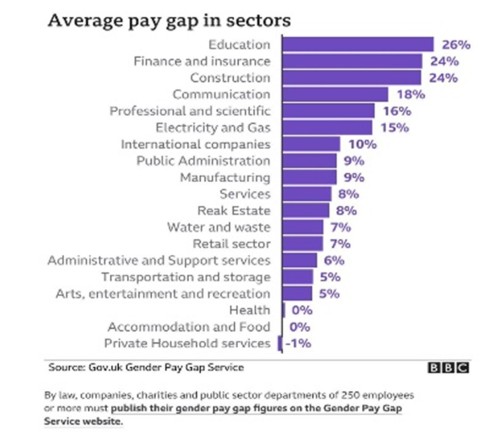
Fig 1 shows the Average Pay Gap by Sector in the UK
Education has been in the worst 3 sectors since reporting began in 2018.

It can't be about feminised professions as Health has a minute #Gender Pay Gap.

So, it is time to get serious about reducing this pernicious gap.

Towards this, we collaborated with NAHT, ASCL, NGA to do the first report into this issue in schools.

We also update the situation each year.

WomenEd has a full set of resources on our campaign pages to help you understand and reduce your organisational #GenderPayGap.

Take the opportunity to take action. Otherwise you are complicit in this inequality.

Individuals

  • Check your organisational gender pay gap 
  • Set up discussion groups around the gap
  • Offer ways to improve it using our resources
  • Ask to discuss this issue with Trustees
  • Remove/Ignore the current salary question on applications and references
  • Develop personal negotiation skills – use our video

Organisations

  • Remove current salary question on applications and references – why is it even there?
  • Involve employees to plan improvements
  • Review recruitment processes for bias
  • Review and adopt flexible working practices
  • Use #WomenEd resources to close the gap.

We have expertise in this issue and can work with you to explore, understand, and reduce your gap.

Please get in touch at This email address is being protected from spambots. You need JavaScript enabled to view it. and show how much you value your women educators and leaders.

What is Equal Pay Day? 2024

byVivienne Porritt @ViviennePorritt

This is my 6th annual blog on Equal Pay Day for the UK which is on 20th November (Fawcett, 2024).

Equal Pay Day is recognised globally and each specific date may be different due to the size of the #GenderPayGap in different countries.

It's the day when women, on average, effectively stop earning relative to men because of the gender pay gap.

Count the days to the end of the year from 20th November in the UK and that's how many days women are effectively working for nothing compared to men.

For Nothing!

I get more and more angry every year because the pernicious inequality of the #GenderPayGap is not improving enough or at a fast pace.

Have a look at my previous blogs!

2019 it was on November 14. (Dreadful)

2020 it was November 20(Better)

2021 Equal Pay Day was November 28. (Even better)

2022 was 20 November. (Going backwards)

2023 was 22 November. (Tiny improvement)

We have not got out of November in 6 years and this year, women have another 2 days where they are not earning compared to men.

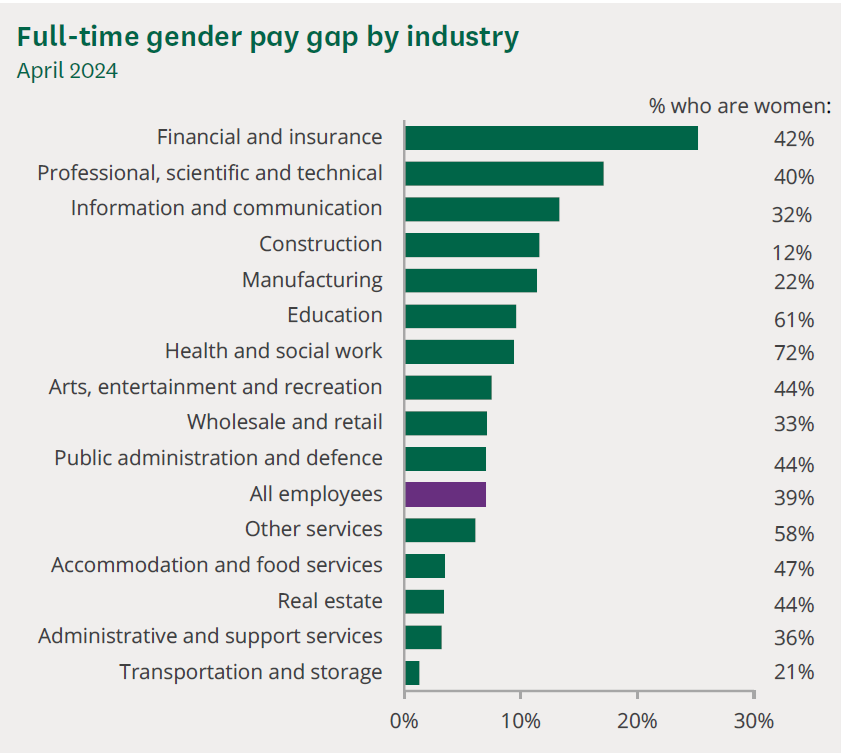
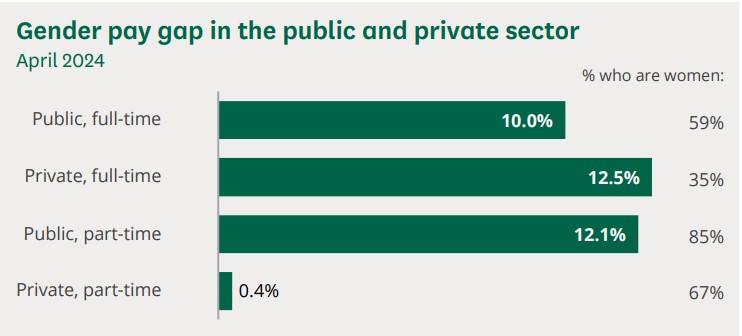
The Gender Pay Gap (GPG) in the UK drives the date of Equal Pay Day and, in April 2024, the UK's GPG for all employees was 13.1% less for women than for men. This is the median (middle) figure for all part-time and full-time employees. I think this is bad enough.

When we turn to the position in education, remember the report we did into schools in collaboration with NAHT, ASCL and NGA? This was the first exploration of such data and it's worth re-reading.

The Government's 2024 analysis includes many GPG bombs:

'a substantial gap emerges among full-time employees aged 40 and over. This links to parenthood - the gap between male and female hourly earnings grows gradually but steadily in the years after parents have their first child.'

'The causes of the gender pay gap are complex and varied. Direct discrimination plays a part in women's lower wages, particularly for older women who entered the labour market on less equal terms to men and who may face dual discrimination on the grounds of age and gender. However, structural factors are the key cause of the gender pay gap. These include occupational segregation; the part-time pay penalty; women's disproportionate responsibility for unpaid caring; and women's concentration in low-paid, highly feminised sectors.'

Which brings us to education, a highly feminised sector.

There may be some improvement in the full-time GPG as education is usually in the worst 3 sectors.

Oh dear I spoke too soon.

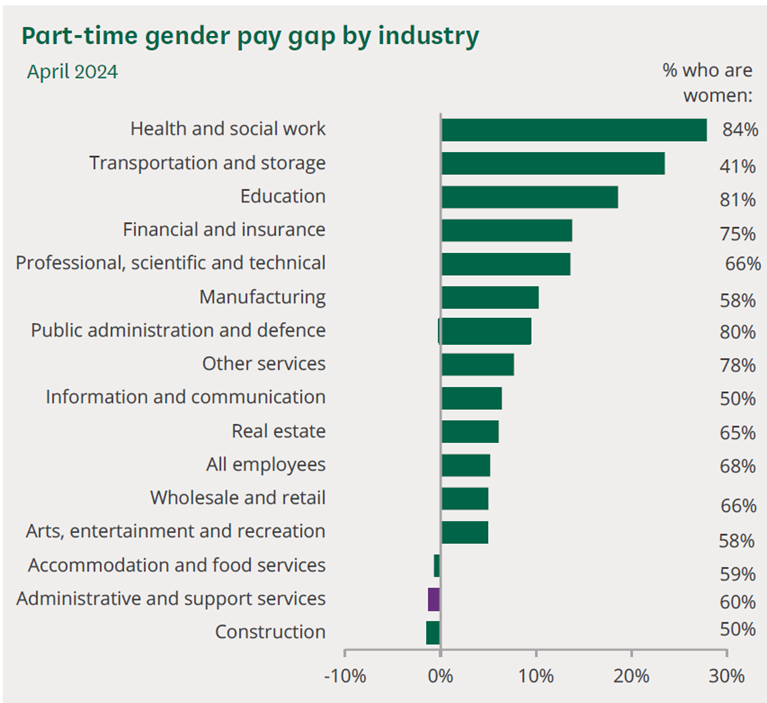
This is a shocking gap for part-time colleagues in education and we know most of them are women.

Isn't this discrimination?

And this final graph cements the issue for me.

In public education, the work of women is undervalued and under paid.

It was also reported this month that:

'The average pay gap at the 20 largest trusts was 32.3 per cent last year (meaning women are paid 67.7p to every £1 for men). It constitutes little progress on the 32.5 per cent gap in 2022 and 33 per cent in 2021.

Of the 100 public bodies with the largest pay gaps, 97 were trusts, analysisby The Guardian has found. This is in part because most of the lower-paid and often part-time roles in schools are done by women, as opposed to women in the same role as men simply being paid less.' (SchoolsWeek, 2024)

With our expertise in this aspect, WomenEd offered to support Trusts in reducing their GPG and one trust responded.

We would really like to work with more Trusts who want to show how much they value their female workforce.

Please can this be the year that women are no cheaper than men in education.

Where are all the men? The Slow Growth of Allyship in Education

byPeter Wheeldon @PeterWheeldon

Proud ally of #WomenEd and a passionate teacher!

Recently, I attended an outstanding #WomenEd Malaysia conference and, out of an auditorium full of passionate and inspiring educators, I was one of only four men present. The conference itself was expectedly both eye-opening and humbling, as I listened to stories of the barriers women face in education, barriers that, as a man, I've rarely had to consider. But the real issue for me was the one-sidedness of the audience. 

How are men supposed to help improve the landscape when we aren't even in the room yet?

I've always believed in gender equality, but for a long time, I wasn't sure how to help. I wanted to be supportive, but I often found myself second-guessing what to say or do. I worried about saying the wrong thing, overstepping or making a mistake that could come across the wrong way. So, like many men, I sometimes stayed quiet, thinking that silence was safer than getting it wrong.

But over time, I realised that hesitation wasn't helping anyone. In fact, avoiding the conversation only reinforced the very inequalities I wanted to challenge. The more I listened to female colleagues, read about gender bias and reflected on my own actions, the more I understood that being an ally isn't about having all the perfect answers - it's about showing up, speaking up and making sure women's voices are heard. Real allyship means being willing to learn, get uncomfortable and act, even if you don't always get it right.

That's why I've made a conscious effort to help men be more proactive in supporting women in education. Becoming a proud supporter of #WomenEd Malaysia was a good first step but I still don't have all the answers. I do know that small, everyday actions can make a big difference. Men, if you've ever felt unsure about how to be a better ally, you're not alone. Here you will find some practical steps that have helped me andthat we can all take - to create a more inclusive and equitable environment for women in education.

There is a problem.

In 2021/22, 75.5% of school teachers in the UK were women, yet a 2019 analysis by the Department for Education found that even after accounting for experience and location, female teachers were 14% less likely to be promoted to senior leadership and 20% less likely to become headteachers than their male colleagues.

In Primary schools, women constitute 85% of teachers but only 74% of headteachers.

In Secondary schools, the disparity is more pronounced: women make up 63% of the teaching staff yet, even now, hold only 42% of headteacher positions.

This imbalance extends to international British schools too: a 2021 study by the Council of International Schools found that only 25% of heads of international schools were women.

So, how can men step up and support women in educational leadership in meaningful ways?

1. Listen and Learn: Understand Women's Experiences

HeForShe's research highlights that men who take the time to educate themselves about gender inequality are far more effective in driving meaningful change. The first step to allyship is listening and learning.

How to Take Action:

  • Engage in conversations with female colleagues and ask about their experiences. Listen without interrupting or offering immediate solutions.
  • Read about gender bias in education and leadership.
  • Reflect on your own biases and how they may influence workplace interactions.

2. Challenge Bias and Inequality: Speak Up and Intervene

Workplace in Action highlights that men who challenge gender bias, whether in hiring, promotions or daily interactions, contribute to a more equitable work culture. Male allies must be willing to call out gender-based biases and work towards systemic change.

How to Take Action:

  • If a woman is being overlooked or spoken over, intervene and redirect the conversation.
  • Call out biased comments, even in casual settings, to set the tone for a respectful environment.
  • Actively advocate for policies that promote gender equity, such as fair parental leave and flexible work options, and challenge those which don't.

3. Amplify Women's Voices: Ensure They Are Heard

Research from Humans of Globe shows that women's ideas are often overlooked in meetings, only to be acknowledged when repeated by a male colleague. This is known as the "hepeating" phenomenon, which limits the contributions of women in professional environments. Male allies can actively counter this by ensuring that women's contributions are recognised.

How to Take Action:

  • If a woman's idea is ignored in a discussion, reinforce it by repeating and crediting her by name.
  • Encourage women to take the lead in discussions and decision-making.
  • Avoid interrupting and ensure all voices are included in conversations.

4. Mentor and Sponsor Women: Open Doors for Growth

Research from the HBA Network shows that organisations with strong male allyship programmes see greater diversity in leadership, yet women still face systemic barriers to career progression. Men in leadership positions can play a vital role in mentoring and sponsoring women to advance in their careers.

How to Take Action:

  • Offer mentorship to female educators, sharing career advice and growth opportunities.
  • Actively sponsor women by recommending them for leadership roles or promotions.
  • Challenge biased hiring and promotion practices to ensure women are given fair opportunities.

5. Model Allyship for Others: Be a Role Model for Change

A study from Leading Now found that when male allies set an example, it shifts workplace culture and accelerates progress towards gender parity. When men openly support gender equity, it encourages others to do the same and helps normalise inclusive behaviour.

How to Take Action:

  • Show up for gender equity initiatives and advocate for inclusivity.
  • Support women-led initiatives, research and educational programmes.
  • Encourage other men to engage in discussions about gender bias and equality.

Final Thoughts

Being a male ally in education is not about perfection—it is about consistent effort. The amazing work that WomenEd Malaysia and WISE are doing is paving the way for greater equity in education, and I hope to see more male allies supporting their efforts next time. Education should be a place where everyone, regardless of gender, can thrive. 

Let's commit to making that a reality.

Why not lead?

by Dr Claire Tasker  @ctasker.bsky.social @clairetasker

On Saturday 24th May I had the pleasure of attending the #WomenEd 10-year celebration.

It was a treat to listen to the stories and reflections; brilliant women articulating what WomenEd had done for, and meant to, them.

It brought back many personal #WomenEd highlights - going to London for the first Unconference, speaking at the 2019 Unconference in my hometown of Sheffield and meeting amazing women through local and national networks.

A key theme for the women in attendance at these events is often community and inspiration and how both strengthen their resolve to apply for leadership roles (& to be 10% braver). 

I particularly enjoyed a session I attended about 'boast b*tches' and the service we can do for our fellow women simply by boasting to others about their achievements. I loved this and try to do this as often as I can: 'Do you know X, she is brilliant at y etc'.

But part of our mission to support women into leadership is more tangible too. It comes back to the question 'why not lead?'

For my Masters in Educational Leadership, I explored the journey of women into headship (specifically Secondary headship). We all know the statistics; a profession with more women in men but not proportionally represented in headship. I suppose I wanted to know that it was about more than childcare. I wanted to know if there were reasons that could be addressed and overcome.

The tentative conclusions were interesting and useful. 

Firstly, that senior colleagues acting as role models and mentors from as early as possible in a woman's career were key. This included the opportunity to talk to these mentors about aspirations (but at one's own pace). 

Another strong theme was the importance of helping aspirant women to build up a wide knowledge base of school life and leadership to give them confidence when applying for promotion. 

Finally, my research found that opportunities to 'try out' leadership roles in an 'acting' capacity are often very useful to aspirant women leaders.

This started me on a mission to run programmes for local women who were interested in school leadership. I acquired money and grants from various sources, targeted different cohorts (sometimes specifically focused on headship but more often on attaining any leadership position) and worked with four different but equally brilliant course co-leaders.

As I write 'Leading Women' cohort 5 is running for women in our Trust (that spans Sheffield and Derbyshire). 

Like all the other programmes I have written and run, it is built around three pillars inspired by my research - knowledge, skills and inspiration. The aim is to overcome some of the barriers that women face by providing local role models, a placement in another school and some useful core leadership knowledge and skills. 

The programme is also partly co-designed with the participants. The core offer has stayed pretty much the same, but I have always asked the participants to decide what leadership knowledge they would most like to have a 'taught' session about.

In the early incarnations it was data, in others it has been school finance, and the current cohort have asked for a session on HR. In their 'taught' session all participants will be asked to ask all their questions in a supportive setting where no question is silly.

I know there are almost certainly lots of similar programmes running all over the country. But if Covid or life or something else stalled a similar endeavour in your area it would be my pleasure to tell you more about 'Leading Women' and share what I have.

I am determined to turn 'why not lead?' into an invitation rather than a sad question with an even sadder answer.


Biography

Claire Tasker is a history teacher and Executive Headteacher in a MAT in Sheffield. She has been teaching since 1997 and has had a range leadership roles in 5 different schools including Assistant Head, Deputy Head, Co-Head, Headteacher and Executive Headteacher.

Women Leading Secondary Schools in England: A Doctoral Thesis


Despite the teaching profession in England being predominantly occupied by women, we remain underrepresented in secondary school headship. While 63% of the secondary workforce are women, only 40% hold headship positions (Department for Education, 2023).

At current rates, gender parity at the top will not be reached until at least 2040 (Fuller, 2016). This article draws on my doctoral research 'An exploration of the experiences and perceptions of women secondary school headteachers in England' (Mullin, 2024), which examined the barriers, enablers, and professional identities shaping women's leadership journeys. With its focus on empowerment, solidarity, and practical action, the findings speak directly to #WomenEd readers and the movement's mission to support women leaders in education to be, in the words of its founders, #10%Braver.

Research Approach and Aims

The study adopted an interpretivist approach framed by intersectional feminist theory, centering the lived experiences of women headteachers themselves. Eight semi-structured interviews and 34 online questionnaires captured diverse perspectives from across state-maintained and independent sectors, with participants recruited through professional networks including #WomenEd, X (formerly Twitter), and LinkedIn.

The research sought to answer three central questions:

1. What are the gender-related 'contours' in the careers of women headteachers?

2. What factors shape the professional identity of women headteachers?

3. What are the experiences and perceptions of women as they progressed to headship?

Findingswere presented creatively as poetic art and visual memes, enabling the women's voices to be heard widely across professional networks – a deliberate choice to ensure accessibility and resonance. 

As one participant explained, "It is important that our words reach the women who need to hear them."

Barriers: Intersectional Realities

While gender was significant, the research revealed that barriers were intersectional, shaped by overlapping factors such as parenthood, wellbeing, race, and perceptions of leadership.

Motherhood and Career Progression

Participants frequently described how maternity leave or part-time working slowed progression. 

One recalled being advised, "Make sure you don't have any more babies if you want to move up," a comment illustrating how career breaks disproportionately affect women leaders.

Perceptions of Leadership and Appearance

Gendered stereotypes persisted. Several women recounted incidents highlighting unconscious bias: being mistaken for administrative staff at events, or comments on clothing choices rather than professional competence. 

As one leader reflected, "He wouldn't have said that to a man dressed in a suit."

Isolation and Underrepresentation

For Black and Global Majority women and those from diverse backgrounds, underrepresentation compounded challenges. 

"I never saw anyone who looked like me in leadership," one participant shared, underscoring the importance of visible role models for aspiring leaders.

These barriers mirror national concerns around recruitment and retention: workload pressures, work-life balance, and stress continue to deter teachers from aspiring to headship (NAHT, 2023).

Enablers: What Helps Women Thrive

Yet the study also revealed factors enabling women to progress and thrive in headship: and solidarity. Participants described how professional sisterhoods offered mentoring, role models, and reassurance. 

As one headteacher noted, "Seeing women like me leading schools made me believe I could do it too."

Coaching and Sponsorship

Structured coaching relationships and sponsors who actively advocated for women's progression made a tangible difference to confidence and career trajectory.

Flexible Working Practices

While rare in secondary settings, job shares and part-time leadership roles enabled some women to balance professional and personal responsibilities effectively.

Self-Belief and Resilience

Perhaps most importantly, participants emphasised determination. As one explained, "Believe in yourself. It is doable."

These findings echo #WomenEd's calls for flexibility, visibility, and systemic change, ensuring talented women are not lost from the profession due to avoidable structural barriers.

Social Media, Visibility, and #10%Braver

An innovative feature of the research was its use of social media for both recruitment and dissemination. By sharing findings as visual poetry and memes, the study amplified women's voices across networks including #WomenEd, connecting directly with aspiring leaders, policymakers, and practitioners.

This approach reflects the power of digital feminism: online platforms enabling women to share experiences, challenge inequality, and build communities of support (Pruchniewska, 2019). The #WomenEd network exemplifies this, using hashtags such as #10%Braver to spark conversations, celebrate successes, and campaign for change.

As one participant commented, "When we speak out, others realise they are not alone - that's where change begins."

Implications for Schools, Trusts, and Policymakers

The research offers practical recommendations aligned with #WomenEd's advocacy:

1. Flexible Leadership Pathways

Schools and trusts should expand job shares, co-headship models, and part-time leadership roles, ensuring talented women are not forced to choose between family and career.

2. Mentoring and Sponsorship

Structured programmes can help women navigate career progression, tackle imposter syndrome, and access senior leadership networks often dominated by men.

3. Bias Awareness Training

Recruitment panels and governing bodies should receive training to address unconscious gender and racial bias in leadership appointments.

4. Wellbeing and Workload Strategies

Tackling workload and promoting wellbeing would benefit all leaders but especially support women balancing intersecting personal and professional responsibilities.

These recommendations echo calls from #WomenEd, the NAHT, and the DfE for systemic reform to address both the gender pay gap and the headteacher recruitment crisis.

Conclusion: Towards Gender Equity in Leadership

This research highlights the resilience, ambition, and determination of women leading secondary schools in England, while acknowledging the structural barriers they face.

Achieving gender equity requires both cultural change and practical reform, ensuring the next generation of leaders truly reflects the communities they serve.

As one headteacher advised aspiring leaders:

"Don't doubt yourself. There will be barriers, but there will also be people who open doors. Walk through them."

For #WomenEd members, the message is clear: be #10%Braver, but demand 100% structural change. 

By amplifying women's voices, challenging inequality, and modelling diverse, inclusive leadership, together we can close the gender gap at the top of education.


References

Coleman, M. (2011). Women at the Top: Challenges, Choices and Change. Palgrave Macmillan.

Department for Education (DfE). (2023). School Workforce in England.

Fuller, K. (2017). Women secondary head teachers in England: Where are they now? Management in Education, 31(2), 54-68. https://doi.org/10.1177/0892020617696625

Mullin, S. (2024). An exploration of the experiences and perceptions of women secondary school headteachers in England. Liverpool Hope University.NAHT. 

(2023). Recruitment and Retention in Education: Annual Report.Pruchniewska, U. (2019).

Digital Feminism and Activism: Social Media and the Movement. Feminist Media Studies, 19(5), 746-760.

Note:

The full thesis is under embargo to protect the anonymity and confidentiality of participating women secondary school headteachers, particularly those from the global majority, whose low representation in leadership roles may increase the risk of inadvertent identification. The embargo is in accordance with ethical approval and institutional researchgovernance requirements.

Women, like men only cheaper 2020

by Vivienne Porritt @ViviennePorritt


This is my 2nd blog on the UK Equal Pay Day which, in 2020, falls on today, November 20th. From this day, most women are working for nothing because they earn less than men. The #GenderPayGap statistics for 2019 showed the mean gap for full time workers to be 13.1%. The gap is wider for part-time employees. Women earned less than men in 90% of all employment sectors. Let’s look at this more closely.

Women, like men only cheaper 2021

by Vivienne Porritt @ViviennePorritt


I write an annual blog about the #GenderPayGap in education, using the date of Equal Pay Day in the UK. From this day, most women are working for nothing for the rest of the calendar year because they earn less than men. In 2019, Equal Pay Day was 14th November and in 2020 it was on 20th November. This year it is November 18th which confirms we have moved backwards during the pandemic. Change is clearly not secure, and the pace of change is too slow.

Women, like men only cheaper 2022

by Vivienne Porritt    @ViviennePorritt

What is Equal Pay Day?

This is my 4th annual blog on Equal Pay Day for the UK which this year, is on 20th November. Equal Pay Day in the UK denotes the day when women, on average, effectively stop earning relative to men because of the gender pay gap.This means that women are working for nothing forthe rest of the year compared to men.

I get more and more angry every year because this pernicious inequality is not improving fast enough.

Have a look at my previous blogs! In 2019 it was on November 14th, in 2020 it was November 20thand in 2021 Equal Pay Day was November 28th. After 3 years of improvement, we have gone backwards again meaning women stop earning 8 days earlier than last year.

Globally, it's a very mixed picture.

But look at the impact of intersectionality in the US:

  • Mothers' Equal Pay Day is September 8. Moms are paid 58 cents for every dollar paid to Dads.
  • Black Women's Equal Pay Day is September 21. Black women are paid 58 cents for every dollar paid to white men.
  • Native Women's Equal Pay Day is November 30. Native women are paid 50 cents for every dollar paid to white men.
  • Latina's Equal Pay Day is December 8. Latinas are paid 49 cents for every dollar paid to white men.

I would very much like to know the same breakdowns in the UK. There are more examples of Equal Pay Days here.

Why is it significant?

Equal Day measures are based on the Gender Pay Gap which is calculated by the difference between the average pay of men and women within a particular group or population. In the UK, The Fawcett Society uses the mean, full-time, hourly gender pay gap for the UK to calculate the gender pay gap, which this year is 11.3%, a tiny decrease from 11.9% last year. However, this is the average and there are significant differences by sector.

Fig 1 below shows the Average Pay Gap by Sector in the UK

Take a look at that graph again.

Education is top of the leader board for the worst Gender Pay Gap of all the sectors. Yet other highly feminised sectors such as Health, do not suffer from such significant pay gaps.

How can a sector which should drive social justice and equity fail to remunerate women appropriately?

For the first time ever, last year WomenEd dived into the gender pay gap in schools. We collaborated with NAHT, ASCL and NGA to produce the ground breaking Closing the Gender Pay Gap in Education: A Leadership Imperative based on School workforce in England: November 2020 (2021).

It's not a pretty sight so check your blood pressure as you read!!

Last year it was clear that the pay gap really emerges at two points: leadership levels and at age 39, with the difference between average salaries between men and women almost doubling from £2,760 at 35-39 to £4,024 at age 40-44.

It was at the senior roles that the gap became marked:

For headteachers, the difference in average salaries by age 60 and over reaches an average of a staggering £17,334.

Yes, you read that right!

What price equity for our schools' workforce?

And such figures led to the Department for Education citing our report 7 times in their advice to the School Teachers Pay and Conditions Board resulting in this formal recognition:

"Our analysis confirms that, during the period from 2010 to 2020, there was a pay gap between male and female teachers, once leadership grades were included in the analysis."(Government Evidence to the STRB March 2022)

Now we need persistent action and our report shares many suggestions to reduce the gender pay gap, which is one of WomenEd's 4 campaigns.

This year's School Workforce Census 2022 is now available and the wonderful research team at NAHT have analysed the data again to reveal disappointingly little progress in tackling the gender pay gap in schools:

While the gap for primary headteachers has narrowed slightly (dropping from £2,834 in 2020/21 to £2,221), the gap for secondary school leaders has leapt by over 37% in the last year – rising to a huge £3,698.

This trend is also reflected for 'other leadership roles' (e.g., deputy and assistant heads), where the gap is up to £1,502 across all state-funded secondary schools.

In 2021/22, the difference in average salaries for head teachers aged 60 and over remains large, with men earning on average £18,296 more than women of the same age. This is a 5% increase in the difference from £17,334 last year.

The divergence point remains at age 35-39 for headteachers, with the difference between average salaries between men and women more than doubling from £3,721 at 35-39 to £7,685 at age 40-44.


What Can YOU do about it?

Have another look at the overall suggestions for actions for government, schools and trusts, governance boards and individuals in our report.

Decide the specific focus you want to tackle. It could be one of the following;

  • Re-negotiation of your current salary
  • Applying for a new job
  • Working out your organisation's pay policy
  • Asking questions about your organisation's gender pay gap
  • Finding out if your organisation has a plan to tackle the gap?

Then use the resources #WomenEd has curated to help you reduce the Gender Pay Gap.


Top Tips

Negotiation is key to tackling your salary so have a look at this video, article, and blog from #WomenEd and Negotiate Like a Woman from Career Equally.

Applying for a job

When you complete the application form, never fill in the question about current salary. It bakes a woman's already lower pay into the new salary.

When you are offered the job and you want it, always say 'thank you, subject to salary', then you can negotiate.

If you are an employer

Join our ever-increasing roll call of honour and remove the inequitable question about current salary then tell us about it. It has nothing to do with the job criteria so why is it there?

The Organisational Pay Gap needs tackling so check what it is and then plan your approach.

Have a look at this terrific Achieving Equal Pay workplace tool kit and apply it!

Have a look at these suggestions for improving recruitment and progression of women and reducing the gender pay gap.


Finally

Rather than going backwards, let's make this blog the spark to help education move forward in a fair and equitable treatment for women leaders in education.

Let's take action so that next year's Equal Pay Day is nearer December!

Our young people can't afford to lose more teachers and leaders.


Show your reaction below and then let #WomenEd and me know on Twitter or other social media what you plan to do about this and what happens as a result!


Notice from #WomenEd:

We invite you to comment on our blogs; we are always delighted to hear from you. To do so, scroll to the bottom of this page and send in your comment with your name and email.

Thank you!

Womened without Borders


As #WomenEd turns 10 years old, I find myself reflecting on what has been and what is next. 

In the space in-between, I wrote these wishes. 

Some are to build more of what I see as #WomenEd's most powerful change agency. Some are what I see as the way we can expand and enhance this impact. 

These wishes act as a call for action for me and hopefully for others. As a member of the global profession, these wishes are posed through an international lens.

Change Agency

The #WomenEd community continues to spread so that more women can connect with a community close to their home or in their country.

The #WomenEd community continues to bring mobile female educators and leaders into contact with other like-minded women.

#WomenEd groups reach deeply into community partnership with female professionals based in the government schools and other private schools within each country/town/location where they are.

#WomenEd groups continue to provide a safe, welcoming and nourishing space for female educators and leaders to share experiences and connect.

#WomenEd groups continue to provide skills training and specific support requested by women.

#WomenEd groups advocate for equity within their school communities – uniting to provide support for the ones speaking out.

Enhance WomenEd's impact

#WomenEd community partners with research bodies to dig deep into the gender pay gap within the international school sector – particularly within the roles where there is not a published salary scale yet.

The international #WomenEd community starts to engage in robust conversations around flexible working practices for staff hired both locally and from outside the country where the school is located. These have already started to happen and include leave criteria, part-time options, health care plans.

The international #WomenEd community starts to amplify ethical best practice around recruitment and retention at all levels within an organisation, partnering with governors, boards and recruitment companies wherever possible.

The international #WomenEd community continues to spotlight women who are leading international schools particularly at CEO / Principal level, sharing these women's stories and what made the difference for their success. They are our trail blazers.

Sue Aspinall is the co-founder of #WomenEd Netherlands and a seasoned International and UK state school Headteacher.

I am now the Founder/ Director of 'Embracing Leadership'– a registered coaching and training company in The Netherlands. I work as a coach and leadership development strategist in the international school sector. Most of my partnerships are with female leaders.

I co-host the popular podcast "She leads Because She Can" – where Caz Jude and I discuss issues common to female international school leaders and show case guest speakers.


You were 10%Braver - Congratulations!

by  Kiran Satti and Vivienne Porritt 
@Miss_K_Sunray3 @Vivienne Porritt

May is WomenEd's Birthday Month: we will be 9.

Sunshine, blooming flowers and endless possibilities: this pretty much sums up the beauty and power that is #WomenEd.

Throughout the month of May, we will be celebrating the successes and achievements of our community as we move further into our 10th year.

A birthday symbolises the ending of one phase and paves the way for another phase to begin. 

Be 10%Braver!

We have evolved as a collective and as individuals, and so our celebrations this year are centred on women who are evolving; a completion is at hand but not finality.

We are celebrating transitions in every sense however big or small it may seem as all progress and being 10%Braver is valuable. 

Over the next few weeks, we will be celebrating the achievements, promotions and big and small wins that our community has achieved because of the amazing women we are privileged to be part of our community. 

We save such posts on Social Media and will be sharing examples of the way women are forging ahead. 


We love this example from Yasmin Ariff on Twitter (X) about her celebratory blog on the Power of Women United.


And this one from Christalla Jamil about her promotion to CEO of LDBS Academies Trust:


If you have an example that makes you proud of yourself or another woman, message us on Twitter or LinkedIn or email us. We can't wait to see them.

Watch this space!